Safety Reflective Trousers: Essential Guide for Workplace Safety
Visibility is very important when your workers are near moving cars, big equipment, or when there isn't much light. Because they have retroreflective tapes and high-contrast bright fabrics, reflective trousers are special work clothes that make workers more visible. These clothes make workers visible from more than 300 meters away by reflecting light right back to its source, like a car's headlights. These trousers are made to meet strict standards like ANSI/ISEA 107 and EN ISO 20471, so they can handle the tough conditions on building sites, in logistics, and for roadside repair in North America and beyond.
Understanding Reflective Trousers and Their Role in Workplace Safety
What Makes Reflective Trousers Different?
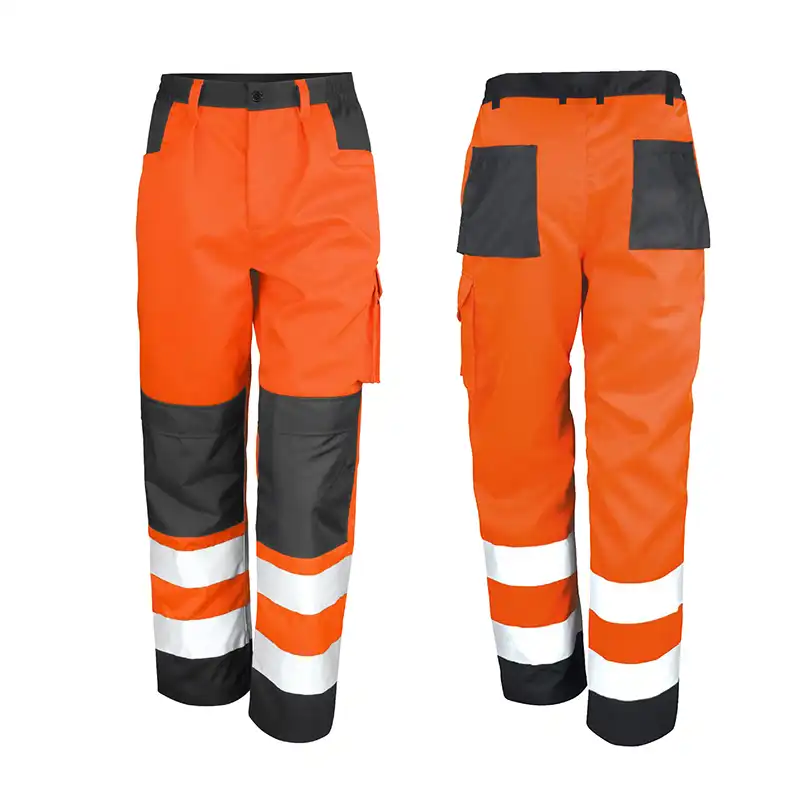
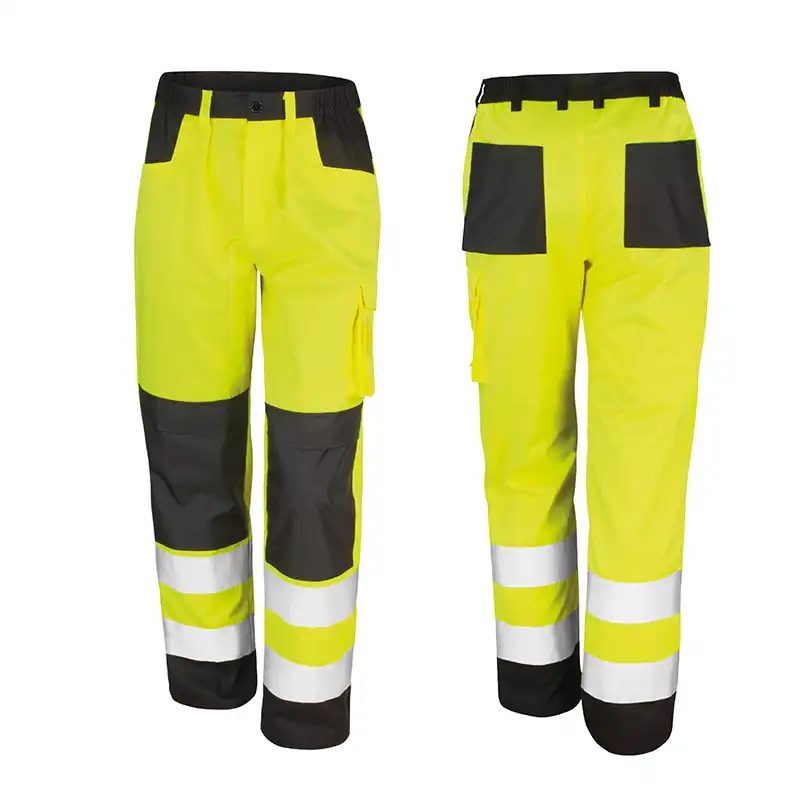
Retroreflective tape using glass bead or micro-prismatic technology sends light back to its source, creating bright glow for driver detection in darkness. Fluorescent polyester or polyester-cotton fabric in safety yellow or orange ensures daytime visibility. Leg bands create human silhouette, solving the "biological recognition deficit"—our inability to recognize people at night. This design makes reflective trousers fundamentally different from regular work pants.
Compliance Standards That Matter
North American clients require ANSI/ISEA 107 compliance. Reflective trousers are typically Class E (Ensemble) classification, achieving Class 2 or Class 3 full-body protection when worn with compatible tops. Highway work zones with traffic exceeding 50 mph require Class 3 ensembles. European manufacturers prioritize EN ISO 20471 certification specifying minimum background material and retroreflective tape areas. Dual-certified garments streamline multi-location procurement.
Industry Applications and Benefits
In the United States, construction sites are where most people who wear high-visibility trousers buy them. Asphalt road repair crews can use waterproof versions that keep them safe from bitumen splashes while still letting them see. Tools and measure tools can fit in the many backpack pockets, so you don't have to carry separate tool belts that can get caught on equipment.
As facilities stay open 24 hours a day, seven days a week, visibility clothing is becoming more and more important for logistics and storage jobs. Forklift drivers and people who work in loading docks have to deal with moving equipment all the time in dark places. Reflective trousers lower the number of accidents that happen because they help workers see people on the ground long before they become a danger.
Key Types and Features of Reflective Trousers for Different Work Environments
Standard High-Visibility Work Pants
Basic high-visibility trousers with straight retroreflective leg bands are safety program foundations. Polyester-cotton blends balance toughness and flexibility. Reinforced stress point stitching extends longevity for procurement managers ordering for construction teams. Welston's standard trousers use 300D Oxford fabric with strengthened knees and utility pockets. Japanese JUKI sewing machines ensure consistent stitch quality across 10,000+ units. Fluorescent fabric maintains color after 25+ industrial wash cycles.
Waterproof and Weather-Resistant Options
PU-coated fabrics with hydrostatic head pressure exceeding 5,000mm keep water out during prolonged rain exposure. Sealed seams eliminate leak points at needle holes. Breathability matters during physical work—modern fabrics have RET values below 20 m³Pa/W, allowing moisture vapor escape while blocking water ingress. Welston's weather-resistant line includes adjustable cuff openings and elastic waistbands for layering without restricting standing or bending mobility.
Specialized Designs for Sector-Specific Needs
Oil and gas operations require multi-norm garments combining high-visibility and flame resistance with antistatic EN 1149 approval. Retroreflective elements must resist sparks. Standard polyester melts catastrophically; treated cotton or aramid blends are mandatory. Municipal transport services need lightweight high-visibility trousers with segmented retroreflective tape for leg bending freedom during frequent vehicle entry/exit. Accessible cargo pockets hold phones and delivery paperwork while seated.
How to Select the Best Reflective Trousers for Your Business Needs?
Defining Your Safety Requirements
Highway work requires Class 3 ensemble grade with retroreflective tape around both legs for 360-degree visibility. Warehouses can use Class E reflective trousers with Class 2 jackets, lowering per-unit costs while providing adequate safety for slower vehicles. Wet climates need waterproof coatings; hot environments need mesh-lined designs for maximum airflow. Cold-weather operations need trousers accommodating thermal base layers without affecting retroreflective band placement. Document parameters before supplier engagement.
Evaluating Supplier Capabilities
Reputable manufacturers readily provide certification documentation. Request test results for tape colorfastness (Grade 4+ under xenon arc testing), retroreflection coefficients (R_A values exceeding 330 cd/(lx·m²)), and wash durability. Production capability matters for large-scale operations. Welston operates three factories with 580+ trained workers and ten production lines, handling orders from 100 to 50,000+ units with consistent lead times. Fortune 500 partnerships demonstrate quality capability.
Customization and Bulk Procurement Considerations
Corporate branding often requires custom embroidery or screen printing on visibility garments. Ensure customization methods don't compromise retroreflectivity performance or certification status. Heat transfer methods typically outperform direct embroidery through reflective tape. Minimum order quantities run 100 pieces for custom specifications. Volume pricing begins at 500+ units, offering 15-25% savings versus small-batch pricing. Welston offers flexible payment terms for established accounts.
Maintenance and Longevity of Reflective Trousers
Proper Cleaning Techniques
Commercial laundries must use gentle cycles with water temperatures below 140°F (60°C). Avoid chlorine bleach which degrades fluorescent dyes and retroreflective adhesives. Fabric softeners leave residues coating glass beads, significantly reducing retroreflection coefficients. Air drying extends lifespan versus high-heat tumble drying which can cause puckering. Low-heat machine drying minimizes damage when necessary. These protocols enable 50+ wash cycles, cutting replacement costs in half over garment lifetime.
Inspection and Replacement Guidelines
Conduct visual inspections every three months. Remove garments immediately if retroreflective tape shows cracks, peeling edges, or diminished brightness. Photometric performance gradually degrades even when tape appears intact. Set maximum service life of 18-24 months for high-use areas. Track issuance dates and wash counts to optimize replacement cycles. Welston's after-sales team responds to quality concerns within 24 hours, replacing units failing prematurely due to manufacturing defects.
Budget Optimization Strategies
Conduct visual inspections every three months. Remove garments immediately if retroreflective tape shows cracks, peeling edges, or diminished brightness. Photometric performance gradually degrades even when tape appears intact. Set maximum service life of 18-24 months for high-use areas. Track issuance dates and wash counts to optimize replacement cycles. Welston's after-sales team responds to quality concerns within 24 hours, replacing units failing prematurely due to manufacturing defects.
Case Studies and Practical Insights on Reflective Trousers Implementation
Construction Safety Improvement Initiative
A highway contractor in the middle Atlantic region that works in Maryland and Virginia made all roadside workers wear Class 3 uniforms, which included high-visibility trousers. Over 18 months, the company saw a 43% drop in close calls involving company cars and contact between workers. In exit interviews, operators said that being able to see the workers' legs better during backing movements was the main thing that made it possible to find them faster.
At first, team members were against the introduction because they said it made them feel bad and limited their movement. As a result of the contractor's actions, acceptance rates went from 67% to 94% for stretch-fabric visibility trousers with flexible knees. This experience shows how important it is for workers to have a say in what products are made—even the best safety gear won't work if workers break the rules because they're uncomfortable.
Logistics Fleet Standardization
A regional transport business that serves the Pacific Northwest made sure that all 200 people who work in its building and on deliveries wore waterproof, reflective trousers. Five different types of trousers were merged into two main categories: insulated for winter and lightweight for summer. Both of these categories met ANSI Class E standards. Buying in bulk from a single seller cut costs per unit by 22% and made it easier to order replacements.
Standardization made it possible to make unified laundry arrangements with businesses that were trained on how to care for high-visibility clothes properly. The usual uniform service life was increased from 8 months to 14 months, which saved more money and made sure that everything looked the same, which helped the company's brand. Safety incident reports showed that during the review time, there were 31% fewer accidents where people were hit by cars in loading dock areas.
Addressing Worker Acceptance Challenges
Municipal public works offices often have trouble getting experienced workers who don't want to change long-standing habits to follow safety rules. To fix this problem, a city in Texas got crew leads involved in trying new products. For six weeks, teams could try out three different kinds of visibility trousers. People bought into the process from the bottom up, which wasn't possible with top-down orders.
Adding new training that focused on the "why" behind standards, along with video clips showing how visibility changes in different lighting conditions, along with the new visibility trousers made acceptance even higher. Within three months of the program's start, 96% of people were following the rules, up from 73% with past methods that were based on rules. This case shows that company culture as well as product standards need to be taken into account for implementation to go well.
Conclusion
Safety at work is more than just following the rules; it also requires carefully choosing protection gear that workers will actually wear every day. High-visibility reflective trousers with retroreflective technology, long-lasting construction, and useful features have been shown to lower the risk of accidents at work in logistics, building, and upkeep. The protection value of these necessary clothes is maximized by balancing the need to comply with regulations with the need for comfort, along with proper upkeep procedures and worker education.
When procurement professionals work with experienced manufacturers, they can get customization options, technical help, and quality control systems that generic providers can't offer. As safety rules change and are strictly enforced, building partnerships with trustworthy companies will help you protect your employees in a way that meets both current and future standards.
FAQ
1. How do I verify ANSI compliance for reflective trousers?
Real ANSI/ISEA 107-compliant clothes have permanent stickers that list the classification (Pants are Class E), the certificate number, and information about the maker. Ask sellers for approval papers that show proof from a third-party testing lab. Keep in mind that Class E trousers don't protect you completely on their own; you need to wear them with Class 2 or 3 tops to be fully compliant in high-risk settings.
2. Can reflective trousers withstand industrial laundering?
If you take good care of them, good high-visibility trousers can last through 25 to 50 wash cycles or more. When drying, don't use chlorine bleach, cloth softeners, or too much heat. Industrial laundromats should follow special rules when washing clothes that bounce light back at them. Independent lab tests, according to ISO 6330 standards, have shown that Welston's visibility trousers keep their visual performance after 30+ commercial wash cycles.
3. What's the difference between glass bead and micro-prismatic reflective tape?
Glass bead tape is standard for most work tasks because it is durable, easy to clean, and doesn't cost too much. Micro-prismatic tape has higher retroreflection coefficients and still works when it's wet, but it can feel harder and costs more. In North America, glass bead technology offers the best mix of performance, longevity, and value for money in building and transportation.
Partner with Welston for Superior High-Visibility Workwear Solutions
B2B clients looking for a dependable provider of reflective trousers can benefit from Welston's 27 years of experience in the industry. Our three plants and ten production lines can handle orders of anywhere from 100 to more than 50,000 pieces, and our prices stay low and get better as your order size increases. We make visibility work trousers that meet both ANSI/ISEA 107 and EN ISO 20471 standards. Our customers are building companies, transport companies, and business uniform programs in North America, Europe, and the Asia-Pacific region.
We can customize your order by adding your brand, writing on the screen, or changing the specifications to exactly meet your needs, all while still following all certification rules. We use high-tech Japanese JUKI tools and strict quality control procedures to make sure that the goods we send you are always the same and safe for your employees. These products also pass regulatory audits. Get in touch with [email protected] to talk about your particular needs and get full product details, certification paperwork, and bulk prices. Our technical team is quick to respond and gives you quotes and real-world answers to your specific operating problems within 24 hours.
References
1. American National Standards Institute. (2020). ANSI/ISEA 107-2020: American National Standard for High-Visibility Safety Apparel and Accessories. International Safety Equipment Association.
2. International Organization for Standardization. (2013). ISO 20471:2013 High Visibility Clothing — Test Methods and Requirements. ISO Technical Committee 94.
3. National Institute for Occupational Safety and Health. (2018). Preventing Worker Injuries and Deaths from Backing Construction Vehicles and Equipment. NIOSH Publication No. 2018-123.
4. Occupational Safety and Health Administration. (2019). OSHA Technical Manual Section VI: Personal Protective Equipment Chapter 1: High-Visibility Safety Apparel. U.S. Department of Labor.
5. Sayer, J. R., & Mefford, M. L. (2004). High-Visibility Safety Apparel and Nighttime Conspicuity of Pedestrians in Work Zones. Journal of Safety Research, 35(5), 537-546.
6. European Committee for Standardization. (2016). EN 1149-5:2018 Protective Clothing — Electrostatic Properties — Performance Requirements. CEN Technical Committee 162.
We specialize in designing, producing, and selling corporate clothing. Mainly produces: industrial clothing, business uniforms, and work clothes for different companies.
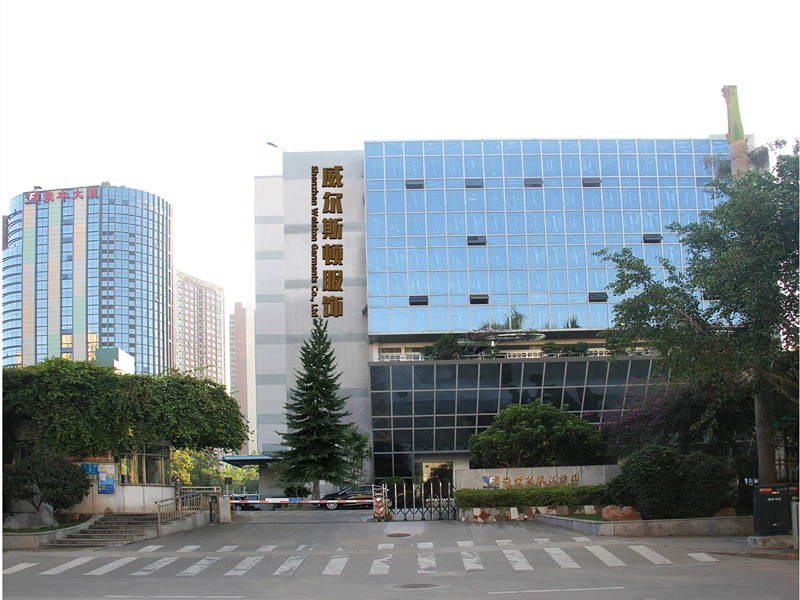
About Welston Garments